
Your Weekly Event Needs an Operating System, Not Just a Flyer
One of the biggest mistakes I see in nightlife is this:
People think the flyer is the plan.
They make the graphic, post it on Instagram, text a few people, hope the DJ shares it, and then act surprised when the room does not build the way they imagined.
The flyer is not the plan.
The flyer is one asset inside the plan.
If you want a weekly event to grow, you need an operating system.
Not something complicated. Not a corporate binder nobody reads. I am talking about a simple weekly rhythm that keeps the promoter, DJ, venue, staff, content, guest list, table sales, and follow-up moving in the same direction.
That is what separates a random party from a real nightlife property.
A weekly event is a machine
Every weekly event has moving parts:
- The concept
- The audience
- The venue
- The music
- The hosts
- The door
- The guest list
- The tables
- The content
- The staff
- The recap
- The follow-up
If those parts are not connected, the night feels random.
And random is expensive.
Random means nobody knows who is responsible for what.
Random means the flyer drops late.
Random means the DJ does not know the room.
Random means the venue is waiting on the promoter, the promoter is waiting on the venue, and the guest is waiting for a reason to care.
That is not how you build consistency.
The 7-day weekly event operating system
Here is a simple rhythm you can use for a weekly night.
You can adjust the days based on your market, but the structure matters.
Day 1: Review the last event
Before you promote the next one, review the last one.
Ask:
- How many people came?
- Who actually brought people?
- What tables sold?
- What time did the room feel alive?
- What content performed best?
- What feedback did guests give?
- What went wrong operationally?
This should not be emotional. It should be useful.
If the night was great, learn why.
If the night was weak, learn why.
That is how you stop guessing.
Day 2: Lock the offer
Every event needs an offer.
Not just "come party."
What is the reason someone should choose this night?
Maybe it is:
- A DJ people trust
- A birthday or group celebration
- A guest host
- A theme
- A table package
- A dinner-to-party experience
- A creator/community takeover
- A special moment inside the night
The offer does not need to be complicated. It needs to be clear.
If your team cannot explain the value of the night in one sentence, your guests will not understand it either.
Day 3: Build the invite list
This is where promoters separate themselves.
Posting is not enough.
You need an invite list.
That means:
- Regular guests
- Past table buyers
- Birthday leads
- Friends of hosts
- People who came last week
- People who almost came last week
- Community partners
- Creators, DJs, and hospitality people who fit the room
Do not wait until Friday afternoon to think of who you want in the room.
Build the list early.
Then invite with intention.
Day 4: Push content with a purpose
Content should not just say the event exists.
Content should build desire.
Use:
- Recap clips from last week
- Crowd moments
- DJ snippets
- Table energy
- Behind-the-scenes setup
- Guest reactions
- Clear call-to-action posts
The goal is to make people feel the night before they arrive.
That is why recap content is so powerful. It proves the room has energy.
But do not only post the highlight. Tell people what to do next:
Text for list.
Reserve a table.
DM for birthdays.
Pull up before a certain time.
Bring your group.
Clear content creates clear action.
Day 5: Confirm the money
If your event has tables, tickets, covers, guest list, or packages, do not leave the money vague.
Confirm:
- Table minimums
- Who owns which reservations
- How guest list is tracked
- What comps are allowed
- Who collects at the door
- What the promoter or host payout is
- What time payment is reconciled
Most nightlife arguments are not about bad intentions.
They are about unclear expectations.
Clear money keeps relationships clean.
Day 6: Run the room
The night itself needs leadership.
Someone should be watching:
- Door flow
- Early room energy
- Table arrivals
- Music pacing
- Staff communication
- Guest issues
- Content capture
- VIP experience
If everyone is just hanging out, nobody is operating.
There is a difference.
The best operators can enjoy the night and still read the room.
That is a skill.
Day 7: Follow up before the energy dies
Do not wait a week to follow up.
The energy is hottest right after the event.
Send:
- Thank-you texts
- Recap posts
- Table buyer follow-ups
- Birthday lead messages
- Guest feedback questions
- Next-event invites
- Community prompts
This is where one good night becomes momentum.
Most people lose the relationship after the event.
That is why they have to start over every week.
Do not start over.
Build on what happened.
The weekly meeting that changes everything
If you are running a weekly night, I recommend a short weekly meeting.
Thirty minutes is enough.
Agenda:
1. Review last week 2. Confirm this week's offer 3. Assign promotion responsibilities 4. Confirm table and guest list strategy 5. Decide content priorities 6. Confirm event-night roles 7. Set one measurable goal
That meeting alone will make you more professional than most teams in the market.
Not because it is fancy.
Because it creates accountability.
What to track every week
You do not need a complicated dashboard.
Start with:
- Total attendance
- Guest list names
- Table reservations
- Table revenue
- Bar performance if venue shares it
- Best-performing post
- Best-performing invite message
- Repeat guests
- New leads collected
- Issues to fix next week
Track this for 8 weeks and you will start seeing patterns.
You will know which hosts actually move people.
You will know which content works.
You will know what time the room turns on.
You will know whether the event is growing or just surviving.
That is power.
The goal is consistency
Anybody can have one good night.
The real skill is building a night that gets sharper every week.
That does not happen by accident.
It happens when the team has a system.
Promoters need systems.
DJs need systems.
Venues need systems.
Hospitality teams need systems.
Because the future of nightlife will not be won by people who only know how to post.
It will be won by people who know how to operate.
If you want to build weekly events that actually grow, start with this operating system. Keep it simple. Run it every week. Track what happens.
Nightlife isn't dying. It's evolving.
And the operators are going to lead the next wave.
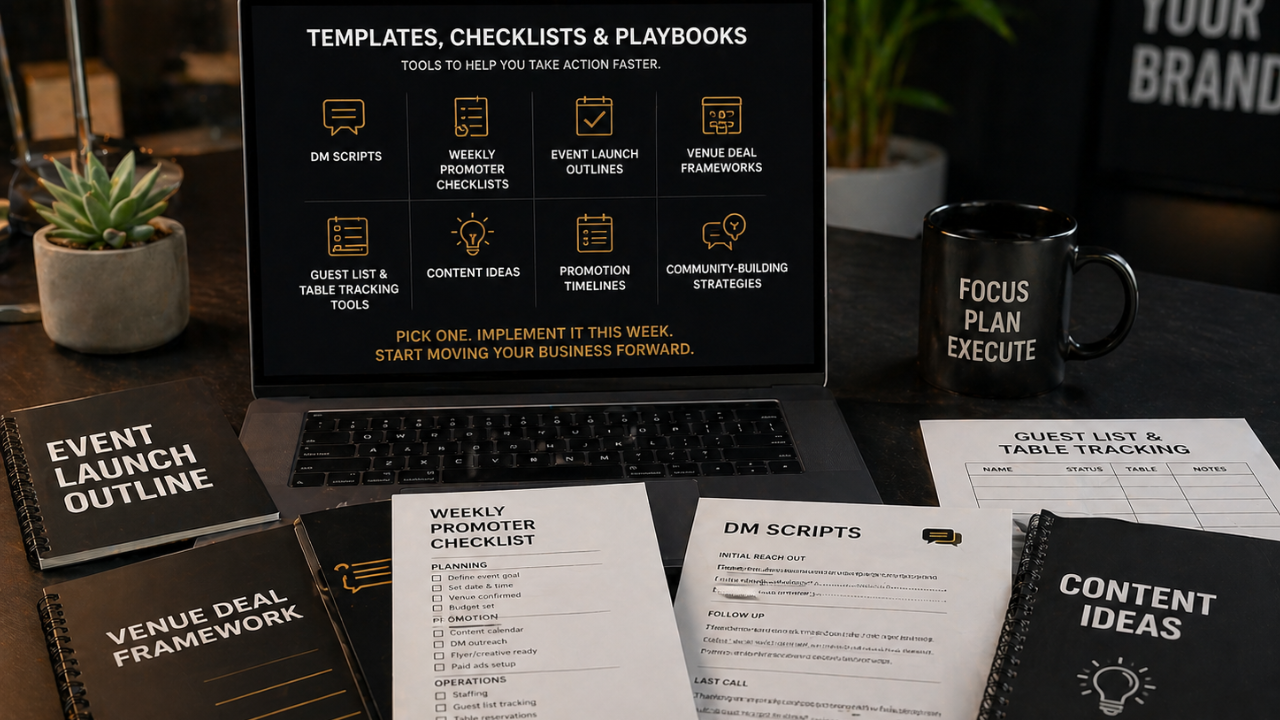
Join the Nightlife Entrepreneurs Members Community for promotion timelines, event launch outlines, trackers, and weekly strategy conversations.
Stay connected with news and updates!
Categories
All Categories
Have you read it?
Julio talks about his journey from being an immigrant at an early age and not being the most popular, not too confident and not having a clue about this Industry all the way to becoming the expert he is today. If this book doesn't motivate you to dive into the industry head first we don't know what will.
Nightlife Isn’t Dying. It’s Evolving.
A survival guide for the new hospitality industry. Julio Mario Zambrano explores how culture, community, changing consumer habits, and smarter operations are reshaping nightlife.