
How Nightlife and Hospitality Brands Can Use the World Cup Without Just Throwing Another Watch Party
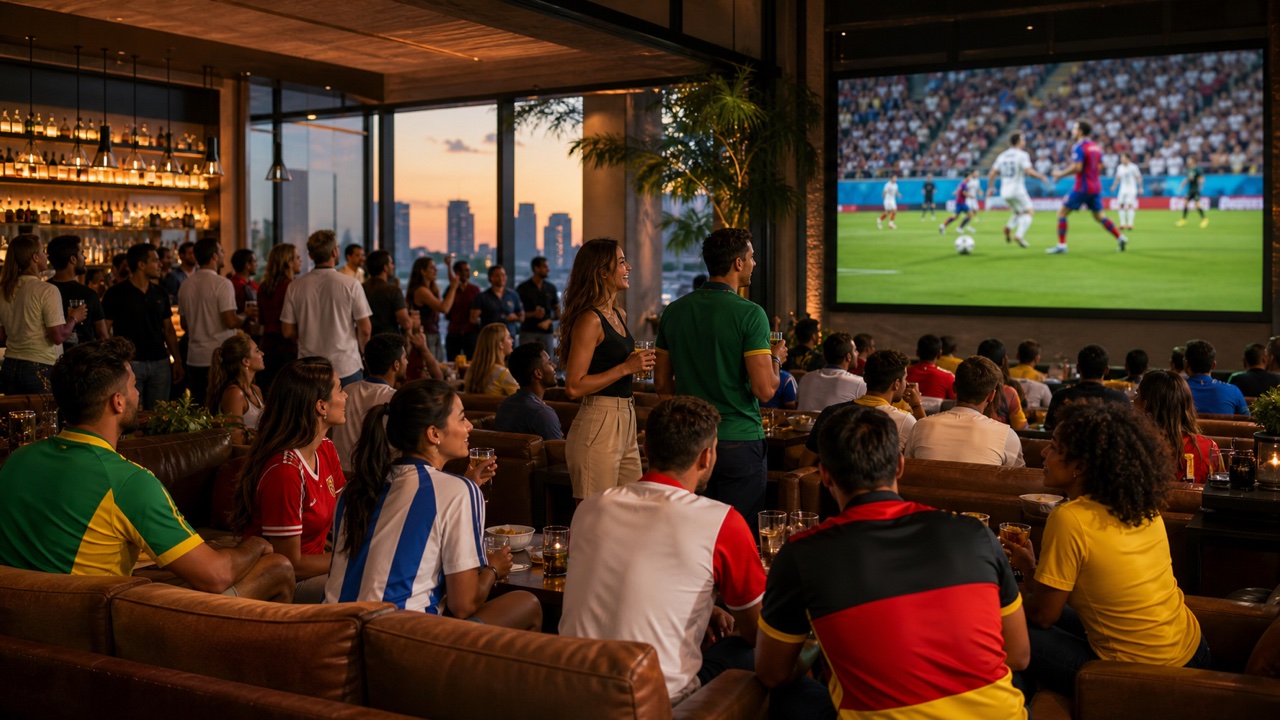
# How Nightlife and Hospitality Brands Can Use the World Cup Without Just Throwing Another Watch Party
The World Cup is here, and if you are in nightlife or hospitality, you should be paying attention.
Not just because soccer is popular.
Not just because bars will have games on.
Not just because people are looking for somewhere to watch.
You should be paying attention because moments like this show you what the future of nightlife and hospitality really is:
Culture.
Community.
Timing.
Experience.
And the ability to turn attention into something people want to gather around.
The 2026 tournament runs from June 11 to July 19 across Canada, Mexico, and the United States. It is the first edition with 48 teams and 104 matches, which means there are weeks of opportunities for venues, promoters, DJs, restaurants, lounges, hotels, daylife operators, coffee concepts, and community builders.
But here is the mistake:
Most people will treat it like a TV schedule.
Smart operators will treat it like a programming calendar.
That is the difference.
Nightlife isn't dying. It's evolving. And the operators who win this summer will not only be the ones who put the game on a screen. They will be the ones who build a reason for people to choose their room over every other room showing the same match.
A major event gives you attention, not a strategy
The World Cup creates demand.
It does not automatically create loyalty.
If all you do is open the doors, turn on the game, and post "watch party today," you may get some traffic. But traffic without strategy is temporary.
The better question is:
What do we want this moment to become for our brand?
For one venue, it might be a full international sports bar experience.
For another, it might be a daylife series around afternoon matches.
For a lounge, it might be elevated watch parties with food, music, and table packages.
For a promoter, it might be a cultural community night built around a specific audience.
For a DJ, it might be the after-match soundtrack.
For a restaurant, it might be a menu-driven celebration that turns into a social.
For a sober-curious brand, it might be a daytime match meetup with coffee, mocktails, food, and connection.
Same tournament.
Different strategies.
Do not build a watch party. Build a reason to gather.
There is a difference between showing the match and hosting the moment.
Showing the match is passive.
Hosting the moment is intentional.
If people can watch the same game at home, at a friend's house, at a hotel bar, or on their phone, your venue needs a stronger reason.
That reason could be:
- The crowd
- The culture
- The food
- The DJ
- The host
- The service
- The seating
- The after-party
- The community
- The viewing quality
- The pre-game energy
- The alcohol-optional options
- The feeling of being around people who care
You are not competing with the game.
You are designing the experience around the game.
Start with the match timing
World Cup programming is different from traditional nightlife because the schedule does not always live at midnight.
Some matches create lunch opportunities.
Some create happy hour.
Some create daylife.
Some create early evening energy that can roll into dinner, DJs, or nightlife.
That matters.
Do not force every match into the same format.
Think in time slots:
Morning match:
- Coffee party
- Breakfast watch social
- Remote worker meetup
- Alcohol-optional hospitality
- Family-friendly or community-first format
Afternoon match:
- Lunch and lounge
- Daylife watch party
- Rooftop activation
- Brand partnership
- Hospitality industry meetup
Evening match:
- Dinner reservation push
- Table package
- DJ-led pre-game and post-game
- Cultural night
- Watch party into nightlife
Late-stage match:
- Ticketed event
- Reserved seating
- Sponsor package
- VIP hospitality
- Content-heavy community moment
The schedule tells you the format.
Stop using one template for every match.
Pick the audience before you pick the offer
The World Cup is global, which is powerful.
But global does not mean generic.
The strongest events usually know who they are for.
Ask:
- Which communities are already in our city?
- Which teams or countries matter to our audience?
- Which matchups will create natural emotion?
- Which guests want a party, and which want comfort?
- Which guests want alcohol, and which want options?
- Which guests want a premium table, and which want a casual community hang?
- Which partners already serve these communities?
If you are in a city with strong Brazilian, Mexican, Colombian, Argentine, English, French, African, Caribbean, or Middle Eastern communities, that matters.
If your venue is near offices, hotels, campuses, stadium traffic, transit, or tourist areas, that matters too.
Do not market every match to everyone.
Build specific rooms for specific people.
That is how you create energy.
Build three layers: game, hospitality, and after
A good World Cup event has more than a screen.
Think in three layers.
1. The game layer
This is the obvious part, but it still needs execution.
- Clear screen visibility
- Good sound
- Seating plan
- Reservation policy
- Arrival window
- Check-in flow
- Food and beverage timing
- Staff briefing
- Backup plan if the room gets packed
If people cannot see, hear, sit, order, or understand the flow, the event loses trust.
2. The hospitality layer
This is where venues can separate.
Create offers that match the format:
- Match-day brunch
- Family-style food boards
- Group table packages
- Mocktail flights
- Coffee and pastry pairings
- Country-inspired menu specials
- Early-bird reservations
- Shared bottle or bucket options
- Post-match happy hour
- Members-only seating
The goal is not to discount everything.
The goal is to make the experience easier to buy.
3. The after layer
This is where nightlife people should pay attention.
What happens when the final whistle blows?
If the match ends and everyone leaves, you hosted traffic.
If the match ends and people stay, meet, dance, eat, drink, network, celebrate, and come back, you built something.
The after layer could be:
- DJ set after the match
- Culture-specific music block
- Industry mixer
- Creator content hour
- Rooftop sunset session
- Dinner seating
- After-party partnership
- Community photo moment
- VIP table transition
The match gives you the spark.
The after layer gives you the business.
Promoters should use this as a relationship moment
If you are a promoter, do not only think, "How do I get paid on this watch party?"
Think bigger.
This is a chance to build new relationships with:
- Venues
- Restaurants
- Hotels
- DJs
- Food brands
- Beverage brands
- Soccer clubs
- Cultural organizations
- Alumni groups
- Creator communities
- Travel and tourism partners
- Local businesses
Your value is not just bringing bodies.
Your value is helping a venue understand who should be in the room, how to reach them, how to host them, and how to bring them back.
That is a different level of promoter.
That is a nightlife entrepreneur.
DJs should not wait until the match is over
DJs can play a major role in World Cup programming.
Not by trying to compete with the game.
By shaping the before and after.
Before the match, music sets the arrival energy.
Halftime can keep the room alive.
After the match, music gives people a reason to stay.
If the event is built around a specific culture or country, the DJ should understand that lane. Not in a lazy way. In a respectful, researched, intentional way.
The right DJ can turn a watch party into a memory.
The wrong DJ can make the room feel disconnected.
That is why alignment matters.
Alcohol-optional experiences belong here too
One of the biggest opportunities around major sports events is that they do not have to be built only around drinking.
Yes, alcohol sales will matter for many venues.
But the modern social guest is wider than that.
Some people want coffee.
Some want food.
Some want mocktails.
Some want a daytime community event.
Some want to watch with friends and still feel good tomorrow.
If you are building daylife, sober-curious, or alcohol-optional experiences, the World Cup gives you a natural gathering point.
That could look like:
- Morning coffee match meetups
- Mocktail watch parties
- Wellness brand pre-game walks
- Brunch socials
- Creator watch lounges
- Members-only daytime gatherings
This is still hospitality.
It just expands what hospitality can look like.
Make the content easy
Major events create content naturally, but you still need a plan.
Before the event, capture:
- Setup
- Menu
- Room design
- Screen test
- Staff prep
- Reservations filling
During the event, capture:
- Guest reactions
- Food and drinks
- Crowd energy
- DJ moments
- Host moments
- Community moments
After the event, capture:
- Recap clips
- Guest testimonials
- Photo galleries
- Next match announcement
- Partner thank-you posts
Do not wait until the event is over to realize nobody captured the room.
If you are using the World Cup to build a series, content is the bridge from one match to the next.
Build a repeatable series, not one random event
The tournament runs for weeks.
That means you can build momentum.
Think in series:
- Opening weekend
- Group stage socials
- Country-specific watch days
- Industry match meetups
- Quarter-final weekend
- Semi-final night
- Final day celebration
Each event should teach you something:
- Which audience came out?
- Which time slot worked?
- Which partner moved people?
- Which offer sold?
- Which content performed?
- Which guests came back?
- Which staff issues repeated?
This is how you turn a cultural moment into an operating system.
Not every event has to be huge.
But every event should make the next one smarter.
The final lesson
The World Cup is a reminder that people still want to gather.
They want energy.
They want culture.
They want shared emotion.
They want places where the moment feels bigger because they are experiencing it with other people.
That is the heart of nightlife and hospitality.
But attention alone is not enough.
You still need strategy.
You still need programming.
You still need service.
You still need the right audience.
You still need a reason for people to choose your room.
So do not just throw another watch party.
Build the room.
Build the rhythm.
Build the community.
Use the World Cup as a catalyst, not a crutch.
That is how modern hospitality wins.
CTA
If you want help turning major cultural moments into real business, join the Nightlife Entrepreneurs Members Community. Inside the VIP Lounge, we break down event launch outlines, promotion timelines, partnership strategy, and the systems behind rooms people remember.
Stay connected with news and updates!
Categories
All Categories
Have you read it?
Julio talks about his journey from being an immigrant at an early age and not being the most popular, not too confident and not having a clue about this Industry all the way to becoming the expert he is today. If this book doesn't motivate you to dive into the industry head first we don't know what will.
Nightlife Isn’t Dying. It’s Evolving.
A survival guide for the new hospitality industry. Julio Mario Zambrano explores how culture, community, changing consumer habits, and smarter operations are reshaping nightlife.