
Stop Booking Random Talent: Build a Music Policy for the Room
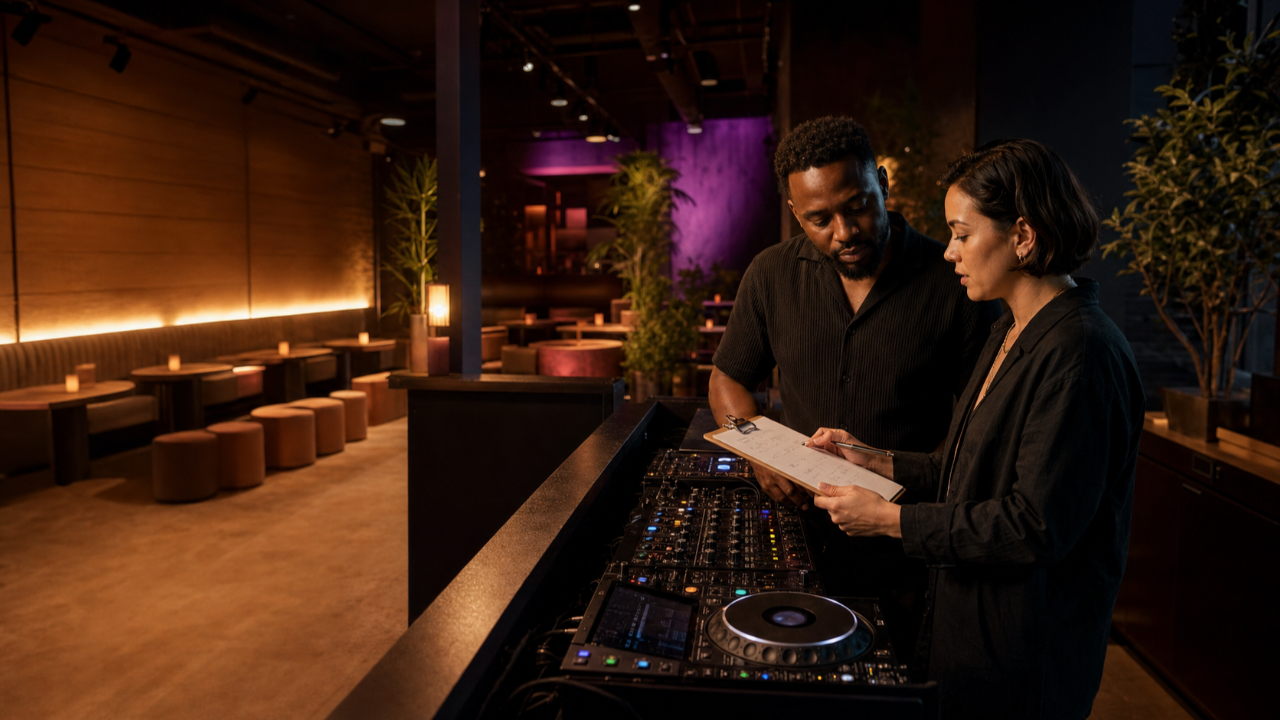
Stop Booking Random Talent: Build a Music Policy for the Room
Music is one of the fastest ways to build a room, and one of the fastest ways to confuse it.
Everybody in nightlife knows the feeling. The flyer looks right. The venue is ready. The promoter did the outreach. The staff is expecting a certain type of night. Guests walk in with one idea in their head, and then the music tells them something completely different. The DJ may be talented. The room may have potential. The issue is not always ability. Sometimes the issue is alignment.
Nightlife is not dying. It is evolving. In this new era, venues and promoters cannot treat music like a last-minute slot to fill. Music is part of the brand promise. It shapes arrival, energy, identity, spend, retention, content, and whether guests trust the room enough to return.
A DJ booking is not just a name on a flyer
A DJ booking is a business decision. It affects who feels invited, who stays, who dances, who buys another round, who films the moment, who brings friends next time, and who quietly decides the room is not for them. That does not mean every event needs a celebrity DJ or a massive production budget. It means the talent has to match the promise.
Too many teams book based on availability, friendship, follower count, pressure, or who is easiest to call on short notice. Sometimes that works by accident, but accidents are not a strategy. A real nightlife brand needs a point of view. It needs to know what the room should sound like, when the energy should rise, what the audience expects, and where there is room for discovery.
The room needs a music identity
A music identity does not mean playing the same songs every week. It means the room has taste. Guests understand the lane. DJs understand the assignment. Promoters know what kind of audience to invite. Staff can describe the night without guessing. The brand becomes easier to trust because people know what they are joining.
Think about the difference between a room that says, "We have DJs," and a room that has a sound. One is a schedule. The other is an identity. The sound can be open-format, Latin, house, Afro, R&B, hip-hop, dance classics, global grooves, sunset lounge, dinner energy, sober-curious social, or something hybrid. The point is not to put the room in a box. The point is to give the room enough shape that people can belong to it.
A music policy protects the guest experience
The phrase "music policy" may sound formal, but it is practical. It simply means the team has clear standards for how music supports the night. What is the opening energy? What should guests feel when they arrive? What songs or genres fit the concept? What should be avoided because it changes the tone too early? How much microphone use makes sense? When should the room peak? How should the DJ handle requests, birthdays, tables, or a mixed crowd?
Those decisions matter because guests do not separate the music from the rest of the experience. If the door is warm but the music is wrong, the room feels off. If the service is polished but the sound is random, the brand feels confused. If the flyer promises a grown, stylish lounge and the first hour feels like a different party entirely, people notice even if they cannot explain it.
DJs do better work with better context
Good DJs can read a room, but they should not have to guess the entire business strategy at 11:45 PM. If the event is meant to build a weekly community, tell them. If the venue wants guests arriving earlier, tell them. If the first hour needs to feel welcoming instead of aggressive, tell them. If the audience includes industry people, dinner guests, regulars, first-timers, sober-curious guests, or a brand partner, tell them.
This is not about controlling the DJ's creativity. It is about giving the DJ the context needed to make better decisions. The best DJs are not jukeboxes. They are part of the hospitality experience. They can protect the room, pace the night, create transitions, and help the event become what it promised to be. But they need alignment with the promoter, venue, and manager before the night starts.
Promoters need to understand the music too
Promoters do not have to be DJs, but they do need to understand what they are promoting. If the sound of the night is undefined, the promoter has no clear promise to sell. That usually leads to generic captions, random guest lists, and a crowd that may not match the room.
A promoter should know the music lane, the guest expectation, the arrival rhythm, and the reason this night is different from the next flyer on the feed. That makes outreach better. It makes DMs more specific. It helps the promoter invite people who will actually enjoy the room, not just people who might show up once. This is where promotion becomes more professional: not louder, but more accurate.
Random music creates random culture
Every room is training its audience. If the sound changes wildly every week with no explanation, guests learn not to trust the brand. If the first hour always feels empty or disconnected, guests learn to arrive late. If the music only serves the loudest table, dancers and regulars may stop caring. If requests drive the whole night, the concept loses its backbone.
That does not mean a room cannot evolve, experiment, or invite new talent. It absolutely should. But experimentation works better when the brand has a foundation. You can introduce a new DJ, a new genre, a new live element, or a new daylife format when the audience understands why it fits. Without that foundation, every new booking feels like a reset.
Build a simple music brief
Before the next event, create a simple music brief. Keep it short enough that people will actually use it. Include the concept, audience, arrival window, opening energy, peak energy, music lane, songs or genres that fit, songs or genres to avoid, microphone expectations, table or birthday handling, and one sentence on what the guest should feel.
Then share it with the DJ, promoter, host lead, manager, and content person. Now everybody is working from the same room promise. The DJ understands the arc. The promoter understands the invite. The manager understands what to protect. The content person understands what moments matter. That small brief can prevent a lot of confusion.
Music is hospitality
I want more DJs, promoters, and venues to understand this: music is hospitality. It welcomes people. It tells them where they are. It helps them relax, connect, flirt, dance, talk, spend, stay, and remember the night. It can make a room feel expensive or cheap, warm or cold, confident or desperate.
When the music is aligned, everything feels easier. The door makes more sense. The room fills with the right pace. The staff can read the energy. The promoter can point to a real identity. The DJ becomes part of the brand, not just background noise. Guests feel like the night knows what it is doing.
Build the sound of the room
The strongest nightlife brands are not built by accident. They are built through taste, standards, rhythm, and repetition. That includes the music. Stop booking random talent just because a slot is open. Start building a music policy that gives your room an identity, gives DJs useful context, gives promoters a clearer promise, and gives guests a reason to trust the experience.
Nightlife is changing, but the fundamentals still matter. People want to feel something. Music is one of the strongest tools we have to create that feeling. Use it with intention.
Stay connected with news and updates!
Categories
All Categories
Have you read it?
Julio talks about his journey from being an immigrant at an early age and not being the most popular, not too confident and not having a clue about this Industry all the way to becoming the expert he is today. If this book doesn't motivate you to dive into the industry head first we don't know what will.
