
How to Turn a Quiet Night Into a Revenue Opportunity Without Discounting Your Brand
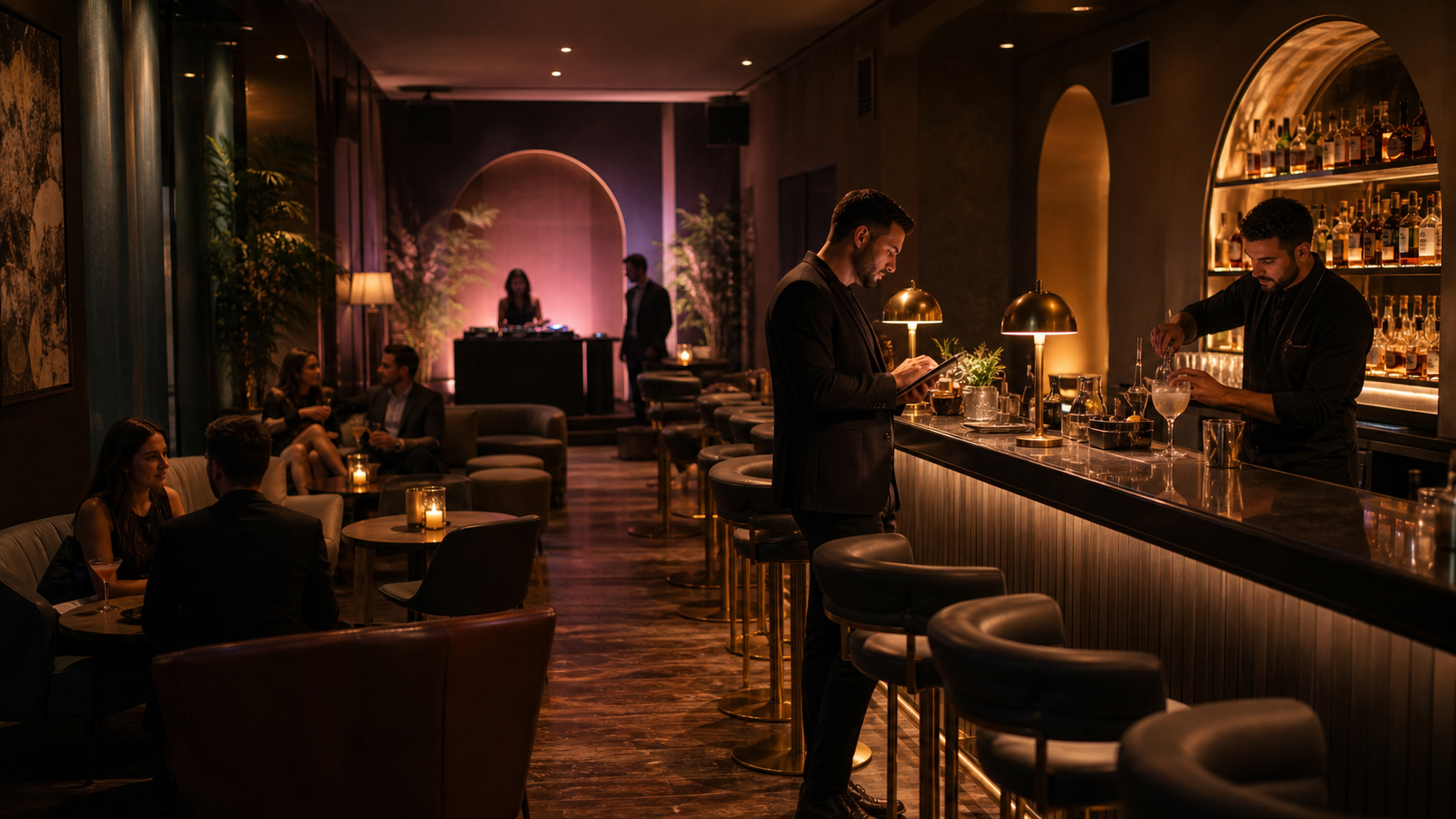
Every venue has a night nobody wants to talk about.
The room is beautiful. The staff is ready. The bar is stocked. The lights are on.
But the energy is not there yet.
Maybe it is Tuesday. Maybe it is an early Wednesday. Maybe it is Sunday after brunch. Maybe it is a shoulder season week when everybody is saving money, traveling, or waiting for the next big weekend.
Most people look at those nights and say, "We just need more promotion."
Sometimes that is true.
But a lot of the time, the problem is not promotion.
The problem is programming.
Nightlife isn't dying. It's evolving. And one of the biggest opportunities for venues, promoters, DJs, and hospitality operators is learning how to turn quiet nights into intentional nights.
Not desperate nights.
Not "free cover and cheap drinks" nights.
Intentional nights.
Do not confuse slow with worthless
A slow night can still be valuable if you know what you are building.
The mistake is treating every night like it has to become Saturday.
It does not.
Tuesday does not have to feel like Saturday. Wednesday does not have to be a bottle service war. Sunday night does not have to compete with Friday at 1AM.
Different nights can serve different purposes.
A quiet night can become:
- A community meetup
- A networking mixer
- A DJ discovery night
- A hospitality industry night
- A creator dinner
- A sober-curious social
- A wine, coffee, or mocktail experience
- A member preview
- A private group activation
- A brand partnership night
The question is not, "How do we make this slow night feel like our busiest night?"
The better question is, "Who would actually value this time slot?"
That question changes everything.
Step 1: Pick the audience before you pick the theme
Too many events start with a theme.
"Let's do a Latin night."
"Let's do R&B."
"Let's do industry night."
"Let's do ladies night."
Those can all work. But only if you understand who the night is really for.
Before you build the flyer, answer this:
- Who has availability during this time?
- Who already gathers in this neighborhood?
- Who needs a place to meet?
- Who has influence but not always a home base?
- Who would be grateful for a consistent room?
That could be hospitality workers who are off on Mondays. It could be DJs who need a place to test music earlier in the week. It could be entrepreneurs who want a social space that is not a boring networking event. It could be wellness and sober-curious communities that want atmosphere without pressure.
When the audience is clear, the event gets easier to build.
When the audience is vague, you end up begging everyone to care.
Step 2: Build a small-room concept first
One of the biggest mistakes I see is people designing slow-night events like they need 300 people to feel successful.
That is the wrong standard.
On a quiet night, start with a concept that feels good at 40 people.
If the room can feel alive with 40 to 75 of the right people, you have something to build from. If the night only feels good when it is packed wall-to-wall, you are creating pressure before the concept has earned it.
Think smaller and sharper:
- A 50-person founder mixer in the lounge
- A 40-person DJ listening session
- A 60-person hospitality industry social
- A 35-person dinner that turns into drinks
- A 75-person rooftop sunset meetup
Small does not mean weak.
Small can mean curated.
Small can mean profitable.
Small can mean easier to repeat.
The goal is not to fake a massive night. The goal is to create a room where people feel like they are in the right place.
Step 3: Stop discounting first
Discounts can be useful, but they should not be the only strategy.
If your first move is always cheaper drinks, cheaper cover, or cheaper tables, you train the market to wait for discounts.
That does not build loyalty.
It builds bargain hunters.
Instead of leading with discounts, lead with value:
- A hosted welcome drink for the first hour
- A curated menu item only available that night
- A guest DJ set with a clear music direction
- A reserved section for a specific community
- A short live conversation, tasting, or demo
- A partner perk that adds value without cutting your core price
The difference is simple.
Discounting says, "Please come because we are cheaper."
Value says, "Come because this experience was designed for you."
That is a stronger message.
Step 4: Partner with communities, not just promoters
Promoters matter. I will always respect the people who can move a room.
But for quiet nights, one of the smartest moves is partnering with communities that already have trust.
Think about:
- Fitness communities
- Founder groups
- Creative collectives
- Hospitality worker groups
- Alumni groups
- Music communities
- Fashion communities
- Sober-curious groups
- Local business networks
Do not just ask them to "bring people."
Give them a reason to host.
Offer a clean structure:
- Their community gets a home base for the night.
- The venue provides hospitality and atmosphere.
- The event has a simple RSVP or guest list.
- The partner gets recognition, a small revenue share, or a future private event opportunity.
- Everyone agrees on the experience standard.
This is how a quiet night becomes a relationship engine.
You are not only filling a room. You are building bridges.
Step 5: Create a repeatable weekly or monthly rhythm
A one-off slow-night event can work.
But the real money is in rhythm.
People need to know when to come back.
If a concept works, do not immediately change everything. Make it better and repeat it.
Create a simple rhythm:
- First Wednesday: creator mixer
- Second Tuesday: DJ listening room
- Third Sunday: alcohol-optional social
- Last Monday: hospitality industry night
Now the market has something to remember.
Consistency builds trust because people can plan around it. Staff can prepare for it. Partners can promote it. Guests can invite friends without needing a full explanation every time.
That is when a quiet night starts becoming a property.
Step 6: Track the right numbers
If you only track total attendance, you may miss the value of the night.
For quiet-night programming, track:
- RSVPs
- Actual attendance
- Repeat guests
- Average spend per person
- Bar sales by hour
- Food sales by hour
- New contacts captured
- Partner referrals
- Private event leads
- Social posts and tags
- Staff feedback
- Guest feedback
Sometimes a quiet-night concept will not look huge on attendance, but it may create better relationships, stronger private event leads, and new communities that come back again.
That matters.
Hospitality is not only about how many people entered the room.
It is about what the room produced.
Step 7: Protect the brand standard
Here is where a lot of slow-night programming goes wrong:
The venue lets the standard drop because the night is not packed.
Bad move.
If anything, quiet nights need even better hospitality because the guest can feel every detail.
The greeting matters.
The music volume matters.
The lighting matters.
The menu matters.
The way the staff treats the first 20 people matters.
On a packed Saturday, the crowd can cover up a lot of mistakes. On a quiet Tuesday, the experience is exposed.
That is not a problem. That is an opportunity.
Quiet nights are where you can teach your team, test ideas, build relationships, and create the kind of attention that is harder to give when the room is slammed.
A simple quiet-night programming framework
If you want to test this, start simple.
Use this framework:
1. Pick one quiet night. 2. Pick one clear audience. 3. Build a concept that feels good with 40 to 75 people. 4. Add value before discounts. 5. Partner with one trusted community. 6. Create a simple RSVP flow. 7. Track attendance, spend, contacts, and feedback. 8. Repeat it at least three times before judging it too harshly.
Do not expect a slow night to become a monster overnight.
That is not the point.
The point is to build a night with a purpose.
Final thought
The future of nightlife and hospitality will not only belong to the venues with the biggest Saturdays.
It will belong to the operators who know how to use the whole week.
The ones who understand that every time slot has a different audience. Every room has a different purpose. Every quiet night has a chance to become a community, a partnership, a training ground, or a revenue stream.
Slow does not have to mean dead.
Slow can mean unfinished.
And if you know how to program it right, that quiet night might become one of the smartest moves your venue ever makes.
Learn the business behind the party.
That is where the growth is.
Join the Nightlife Entrepreneurs Members Community for programming templates, event launch outlines, and venue growth strategy you can use before your next slow night.
Stay connected with news and updates!
Categories
All Categories
Have you read it?
Julio talks about his journey from being an immigrant at an early age and not being the most popular, not too confident and not having a clue about this Industry all the way to becoming the expert he is today. If this book doesn't motivate you to dive into the industry head first we don't know what will.
Nightlife Isn’t Dying. It’s Evolving.
A survival guide for the new hospitality industry. Julio Mario Zambrano explores how culture, community, changing consumer habits, and smarter operations are reshaping nightlife.