
The Event Team Alignment Checklist: How Promoters, DJs, and Venues Win the Same Night
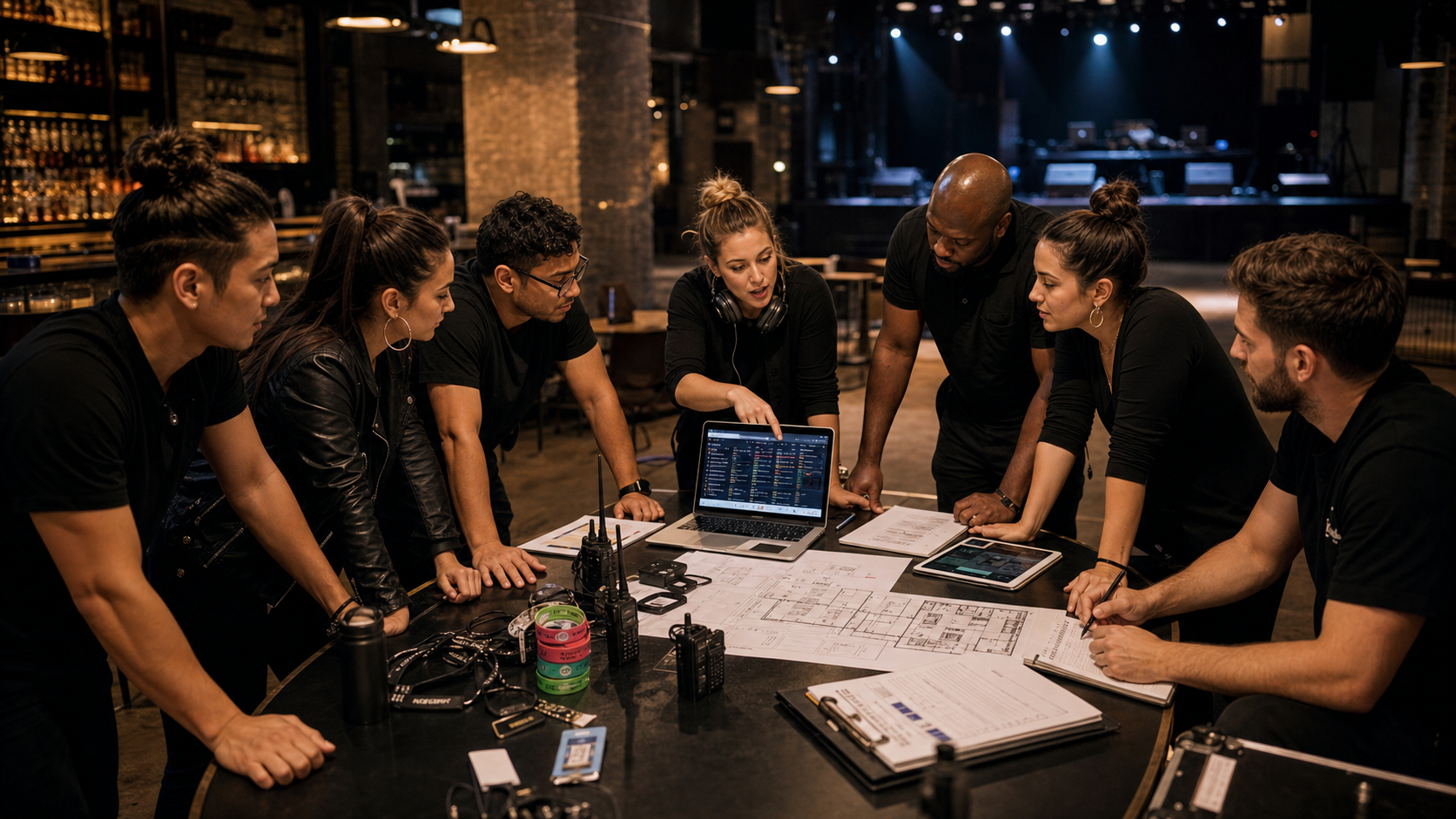
Most bad nights do not fail because nobody cared.
They fail because everybody cared about a different thing.
The promoter cared about the guest list.
The DJ cared about the set.
The venue cared about revenue.
The door cared about control.
The bar cared about speed.
The manager cared about the room not falling apart.
All of those things matter.
But if nobody aligns them before the night starts, the guest feels the confusion.
And once the guest feels confusion, trust drops.
Nightlife isn't dying. It's evolving. And in the new era, the winning teams will not be the ones where everyone is just talented by themselves. The winners will be the teams that know how to move together.
That is what this checklist is about.
Not theory.
Not corporate meeting energy.
Just the simple things promoters, DJs, venue managers, door teams, and hospitality staff should clarify before the doors open.
Alignment starts with the promise of the night
Every event needs one clear promise.
Not a paragraph.
One sentence.
What are guests coming for?
Examples:
- "A polished open-format lounge night for young professionals."
- "A high-energy Latin party built around dancing, birthdays, and tables."
- "A daylife rooftop social with music, food, and alcohol-optional hospitality."
- "A DJ-led house music room for people who care about the sound."
- "A community mixer that feels social first and party second."
If the team cannot explain the night in one sentence, everyone will operate from their own version of the event.
That creates problems.
The DJ may play too hard too early.
The door may let in the wrong energy.
The promoter may sell the night to the wrong crowd.
The venue may staff it like a normal bar shift when the concept needs a different touch.
The promise of the night is the anchor.
Start there.
Checklist item 1: Who is the guest?
Before the event, the team should agree on the target guest.
Not just "everybody."
Everybody is not a strategy.
Get clear:
- Age range
- Music taste
- Spending style
- Dress code expectation
- Table buyer profile
- Guest list profile
- Community or culture lane
- What would make them feel respected
- What would make them never come back
This helps the promoter invite better.
It helps the DJ program better.
It helps the door make better decisions.
It helps the venue understand what kind of experience they are really hosting.
When the guest is clear, the room gets cleaner.
Checklist item 2: What does success look like?
One of the biggest reasons teams argue after an event is because nobody defined success before the event.
The promoter might say, "I brought 180 people."
The venue might say, "But they did not spend enough."
The DJ might say, "The energy was amazing."
The manager might say, "The bar was overwhelmed and the door was messy."
All of those can be true at the same time.
So define success upfront:
- Target guest count
- Target table sales
- Target bar revenue
- Target arrival window
- Target repeat guest capture
- Target content moments
- Target guest experience standard
- Target closeout or recap process
This is not about making everything perfect.
It is about giving the team a shared scoreboard.
Without a shared scoreboard, everyone keeps score differently.
Checklist item 3: Who owns each part?
A lot of nightlife chaos comes from vague responsibility.
"Somebody should post."
"Somebody should confirm the DJ."
"Somebody should handle the birthday."
"Somebody should check the guest list."
"Somebody should get photos."
Somebody is not a person.
Before the event, assign owners:
- Promotion lead
- Guest list lead
- Table sales lead
- DJ or music lead
- Door lead
- Floor or hospitality lead
- Content lead
- Manager on duty
- Post-event follow-up lead
One person can own multiple parts, especially in smaller events. That is fine.
But every important part needs a name attached to it.
If there is no owner, it is a wish.
Checklist item 4: What is the arrival plan?
The first impression of the night happens before the guest hears the music.
It happens at the door.
It happens in the line.
It happens when someone says their name is on the list.
It happens when a table guest arrives and nobody knows where they belong.
The arrival plan should answer:
- Where does guest list check-in happen?
- Who has the final list?
- How are table guests identified?
- How are birthdays or special groups handled?
- Who communicates with the door when a VIP is close?
- What happens when the room is not ready yet?
- What happens when the line gets backed up?
- What language should the door use with guests?
This matters because arrival sets the emotional tone.
If the guest feels respected early, the night has a better chance.
If the guest feels confused early, you spend the rest of the night trying to recover.
Checklist item 5: What is the music arc?
The DJ should not be guessing what the night is supposed to become.
Music is not background.
Music is one of the main ways the room gets built.
Before the event, the DJ and team should discuss:
- Opening energy
- Peak energy
- Closing energy
- Music lanes that fit the brand
- Music lanes that do not fit the brand
- Birthday or table moments
- Microphone expectations
- Requests policy
- Transitions between dinner, lounge, party, and close
This is especially important for hybrid experiences.
A dinner that turns into dancing needs a different arc than a nightclub night. A sober-curious social needs a different arc than a heavy bottle service room. A rooftop sunset party needs a different arc than a 1AM dance floor.
Good DJs can read a room.
Great teams help the DJ understand the room before it fills.
Checklist item 6: What is the table and spend strategy?
If tables matter to the night, do not leave VIP strategy to last-minute texts.
Get clear:
- What packages are available?
- What minimums apply?
- What is included?
- Who is collecting deposits?
- Who confirms arrival time?
- Who communicates table location or tier?
- Who handles guest count changes?
- Who introduces the group to the server?
- What experience should that table feel from arrival to close?
Modern VIP is not just bottles.
It is ease, access, status, comfort, and hospitality.
If the team only thinks about the sale and not the service, the table buyer may not come back.
That is short-term thinking.
Checklist item 7: What content do we need?
Content should not be an accident.
Do not wait until the night is over and then realize nobody captured the moments that mattered.
Before the event, identify:
- The key photo moments
- The key video moments
- The DJ moments
- The guest experience moments
- The room energy moments
- The food or drink moments
- The host or promoter moments
- The recap deadline
- Who receives the content
- How it will be used next week
Content is not only for looking busy.
Content is memory.
Content is proof.
Content is promotion for the next one.
But it only works when it reflects the actual promise of the night.
Checklist item 8: What happens after the event?
The night is not finished when the lights come on.
That is when the relationship continues.
After the event, the team should know:
- Who sends thank-you messages
- Who follows up with table buyers
- Who saves guest contacts
- Who posts the recap
- Who reviews numbers
- Who shares feedback with staff
- Who books the next date
- Who adjusts the next promotion plan
If you do not have a post-event plan, you are leaving money and relationships on the floor.
Every event should make the next event smarter.
The 20-minute pre-event alignment meeting
This does not need to become complicated.
For most events, a 20-minute alignment meeting is enough.
Use this structure:
1. Confirm the promise of the night. 2. Confirm target guest and success metrics. 3. Confirm owners for promotion, door, tables, music, content, and follow-up. 4. Confirm arrival plan and VIP plan. 5. Confirm music arc and room timing. 6. Confirm recap and next-step responsibilities.
That one conversation can save hours of confusion.
It can also save relationships.
Because in nightlife, a lot of conflict is not really about laziness.
It is about assumptions.
One person assumed the promoter was handling it. Another assumed the manager knew. Another assumed the DJ understood. Another assumed the door had the list.
Assumptions are expensive.
Alignment is cheaper.
Final thought
A great event is not only a good crowd.
It is a team executing the same promise from different positions.
The promoter brings the relationship.
The DJ shapes the energy.
The venue provides the room.
The door protects the standard.
The bar and floor team deliver the hospitality.
The manager connects the pieces.
When those roles work against each other, even a busy night can feel messy.
When those roles work together, a good night can become a brand.
That is the future of nightlife and hospitality.
Not just more flyers.
Not just louder promotion.
Better teams. Better systems. Better rooms.
Build rooms people remember, not just events people attend.
Join the Nightlife Entrepreneurs Members Community for event checklists, promo timelines, DJ strategy, and venue operations tools built for real nightlife teams.
Stay connected with news and updates!
Categories
All Categories
Have you read it?
Julio talks about his journey from being an immigrant at an early age and not being the most popular, not too confident and not having a clue about this Industry all the way to becoming the expert he is today. If this book doesn't motivate you to dive into the industry head first we don't know what will.

Nightlife Isn’t Dying. It’s Evolving.
A survival guide for the new hospitality industry. Julio Mario Zambrano explores how culture, community, changing consumer habits, and smarter operations are reshaping nightlife.