
Alcohol-Optional Events Need a Real Offer, Not Just a Mocktail Menu
Alcohol-Optional Events Need a Real Offer, Not Just a Mocktail Menu
One of the biggest mistakes people make with sober-curious or alcohol-optional nightlife is thinking the entire strategy is the drink menu.
Add a few mocktails.
Put "zero proof" on the flyer.
Maybe mention wellness.
Then hope a new audience shows up.
That is not a strategy.
That is a menu adjustment.
Do not misunderstand me. The beverage program matters. A thoughtful non-alcoholic menu can absolutely improve the guest experience. It can help people feel included. It can create new revenue. It can show that the venue is paying attention to where culture is going.
But an alcohol-optional event cannot be built only around what people are not drinking.
It has to be built around what they are coming for.
Connection.
Music.
Community.
Energy.
Taste.
Identity.
Discovery.
A reason to leave the house.
That is the real offer.
Nightlife isn't dying. It's evolving. And one of the clearest signs of that evolution is that people still want to gather, but they want more ways to participate.
Some guests are drinking.
Some are not.
Some are taking a break.
Some are training for something.
Some have work early.
Some are sober.
Some are sober-curious.
Some just do not want every social experience to revolve around alcohol.
The opportunity is not to judge any of that.
The opportunity is to design better rooms.
Alcohol-optional does not mean energy-optional
The fear some nightlife people have is that alcohol-optional means boring.
That fear usually comes from a limited imagination.
Energy does not only come from alcohol.
Energy comes from music.
It comes from lighting.
It comes from the crowd mix.
It comes from arrival flow.
It comes from a clear host.
It comes from programming.
It comes from people knowing why they are there.
It comes from moments that make the room feel alive.
If an event only works when people are drinking heavily, that tells you something about the event.
A strong concept should have its own pulse.
That does not mean every room has to be a wellness lounge or a quiet networking event. Alcohol-optional can still be stylish, social, loud, music-driven, flirtatious, premium, and full of movement.
It just needs to be designed with intention.
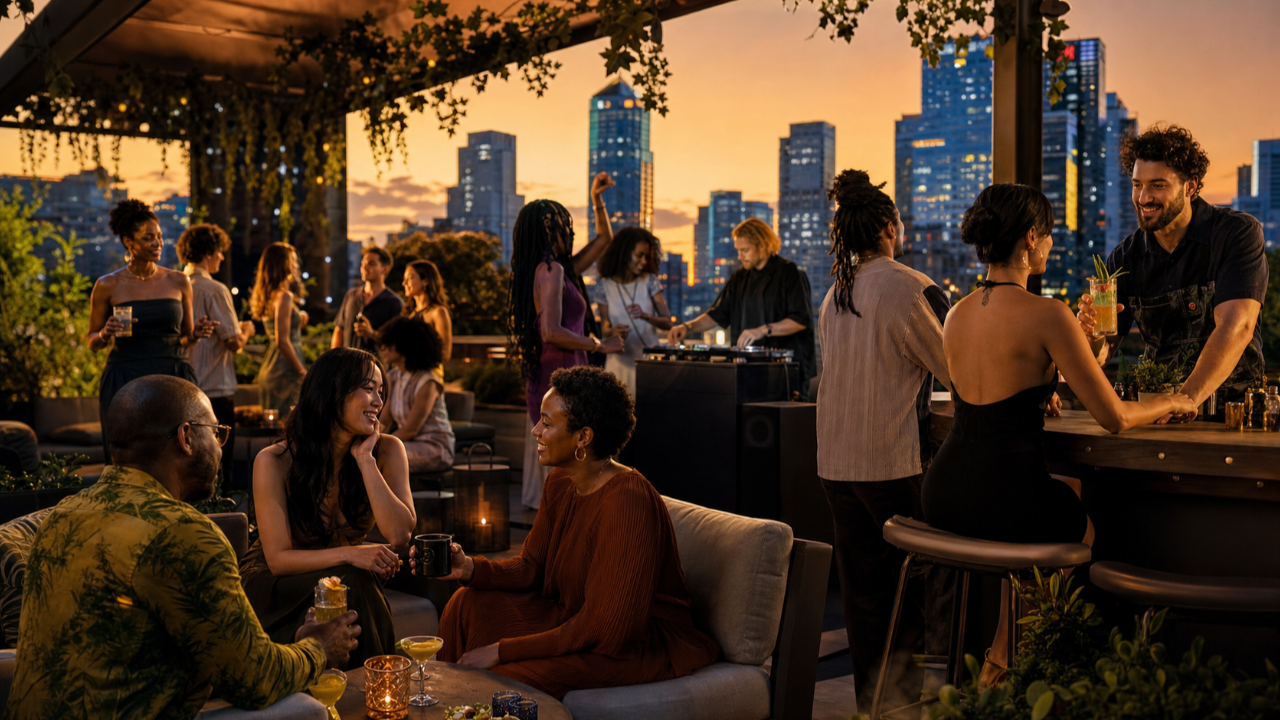
Think about some of the formats already growing in modern hospitality: coffee parties, brunch parties, rooftop sunsets, listening sessions, dinner-to-dance concepts, wellness socials, social clubs, members-only mixers, cultural pop-ups, and early-evening dance floors.
The common thread is not that everyone is sober.
The common thread is that the experience gives people a reason to gather beyond "come drink here."
That is the lesson.
Start with the guest, not the trend
Do not build an alcohol-optional event because you saw the phrase online.
Build it because you understand a real guest.
Who is this for?
Is it for professionals who want a social night but do not want to be out until 3AM?
Is it for people who love music but are tired of chaotic rooms?
Is it for fitness, wellness, or creative communities that still want nightlife energy?
Is it for women who want a safer, better-hosted social environment?
Is it for young professionals who want to meet people without the pressure of a traditional club night?
Is it for hospitality people on an off night?
Is it for a brunch or daylife audience that can become a repeat community?
The clearer the guest, the stronger the event.
Too many promoters start with a flyer concept before they know the person they are trying to serve. That is backwards.
In modern nightlife, the audience is not just a target. The audience is part of the product.
You are not just selling admission.
You are curating a room.
That means your music, venue, timing, pricing, partners, menu, hosts, and content should all make sense for the person you want in that room.
Build the offer in layers
A real alcohol-optional event needs more than "doors open at 8."
It needs layers.
The first layer is the core reason to attend.
Maybe it is a DJ and dancing, but earlier.
Maybe it is a social club mixer with music that builds.
Maybe it is a dinner party that turns into a lounge.
Maybe it is a coffee party with a strong DJ, good lighting, and creator-friendly energy.
Maybe it is a rooftop sunset event with wellness partners, food, and a real music identity.
The second layer is hospitality.
How does the guest enter?
Are they greeted?
Do they know where to go?
Does the room make sense?
Are the non-alcoholic options visible, attractive, and easy to order?
Does the staff understand the concept, or are they treating alcohol-optional guests like an inconvenience?
The third layer is community.
Who makes people feel welcome?
Who introduces people?
What groups are naturally connected to the event?
What happens after the event?
How do guests stay in the loop?
The fourth layer is monetization.
This is where people get nervous, but they should not.
Alcohol-optional does not mean revenue-optional.
You can monetize tickets, memberships, food, coffee, tea, premium non-alcoholic cocktails, functional beverages, brand partnerships, private tables, reserved seating, merch, workshops, vendor activations, sponsor packages, photography upgrades, and future community offers.
The key is that the revenue model has to match the experience.
Do not force bottle-service logic onto every concept.
Some rooms are built for tables.
Some are built for ticket volume.
Some are built for memberships.
Some are built for brand partnerships.
Some are built for food and beverage mix.
Some are built as lead generation for a larger community.
Smart operators know the difference.
Do not make non-drinkers feel like a side category
Here is a simple test.
If a guest is not drinking alcohol at your event, do they still feel like the event was designed for them?
Or do they feel like they are ordering from the apology section of the menu?
That matters.
The zero-proof options should not feel like an afterthought. They should be easy to find, easy to explain, visually appealing, and priced in a way that respects both the guest and the business.
The staff should know what they are.
The bartender should not make a face when somebody asks.
The server should not treat it like a lower-value order.
The menu should not make the guest feel like they are doing something unusual.
This is not about pushing alcohol away.
It is about expanding the invitation.
Some guests will drink cocktails. Some will drink sparkling water. Some will drink coffee. Some will drink a premium zero-proof cocktail and still buy food, tip well, bring friends, post content, and come back every month.
That guest has value.
Do not make them feel invisible.
Programming beats labeling
One thing I would be careful about: do not rely too heavily on the label.
Sometimes calling something "sober" or "sober-curious" is exactly right because that is the community you are serving.
Other times, the stronger move is to lead with the experience.
Sunset Social.
Coffee & Dance.
Dinner Club.
The Listening Room.
Sunday Reset.
After Work Social.
Rooftop Rhythm.
The label should fit the audience.
For some people, the alcohol-optional piece is the main attraction.
For others, it is simply a feature that makes them feel more comfortable attending.
This is where promoters and venues have to listen.
Do not copy language blindly.
Know your market.
Know your guest.
Know what promise will make them say, "That sounds like my kind of room."
DJs matter even more in alcohol-optional rooms
The DJ in an alcohol-optional room cannot just hide behind volume.
The music has to create momentum.
It has to help people transition from arrival to comfort to movement.
It has to read the room when people are more present, more observant, and less dependent on alcohol to loosen up.
That is a skill.
Some DJs are perfect for this. They know how to build trust, not just drop records. They know how to create a social temperature. They understand that early does not mean sleepy and alcohol-optional does not mean low energy.
If you are a DJ, this is an opportunity.
Modern social formats can become new residencies, new communities, new partnerships, and new revenue streams.
But you have to think like a builder.
Help shape the concept.
Bring audience insight.
Collaborate with the venue.
Support the content.
Understand the guest journey.
That is how you become more than someone filling a time slot.
That is how you become part of the brand.
Venues should test before they judge
Some venue owners dismiss alcohol-optional or sober-curious programming because they compare it to their highest alcohol-spend nights.
That is the wrong comparison.
You have to compare the concept to the right business problem.
Can it activate an early time slot?
Can it bring in a new audience?
Can it create food revenue?
Can it build community on a slower night?
Can it attract brand partners?
Can it give the venue a more modern identity?
Can it create content that reaches people who do not respond to traditional club promotion?
Can it produce a repeat monthly event?
Can it feed memberships, private events, workshops, or consulting opportunities?
Not every test will work.
That is normal.
But do not judge a new format using old expectations.
If you are testing a new social experience, define success clearly before the doors open.
Maybe success is 80 paid guests and strong food sales.
Maybe it is 40 high-quality community members who come back next month.
Maybe it is a brand partner covering production.
Maybe it is content that introduces the venue to a new audience.
Maybe it is a Monday or Sunday concept that slowly grows into a reliable property.
The point is to know what you are building.
The future belongs to choice
The future of nightlife is not everyone drinking less.
It is not everyone drinking more.
It is choice.
It is rooms where different types of guests can participate without feeling out of place.
It is operators who understand that hospitality is bigger than alcohol.
It is promoters who can build community, not just guest lists.
It is DJs who can create energy in new formats.
It is venues that can monetize culture in more than one way.
That is the opportunity.
Alcohol-optional events are not a threat to nightlife.
They are a reminder that nightlife has always been about people first.
People want to gather.
People want music.
People want rooms that feel alive.
People want to belong somewhere.
The smartest entrepreneurs are going to build those rooms in more formats, at more times, for more types of guests.
That is not the death of nightlife.
That is the expansion of it.
So yes, build the mocktail menu.
Make it good.
Make it profitable.
Make it beautiful.
But do not stop there.
Build the offer.
Build the community.
Build the reason to come.
That is where the real business is.
CTA: Start with Free Access inside the Nightlife University Main Lobby, then upgrade to the VIP Lounge when you are ready for the full course library, templates, calls, and community.
Stay connected with news and updates!
Categories
All Categories
Have you read it?
Julio talks about his journey from being an immigrant at an early age and not being the most popular, not too confident and not having a clue about this Industry all the way to becoming the expert he is today. If this book doesn't motivate you to dive into the industry head first we don't know what will.
Nightlife Isn’t Dying. It’s Evolving.
A survival guide for the new hospitality industry. Julio Mario Zambrano explores how culture, community, changing consumer habits, and smarter operations are reshaping nightlife.
